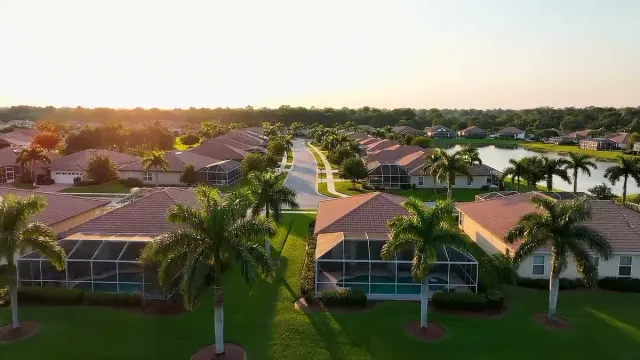
Short-term rental rules decide whether a home near the theme parks can be rented by the night, and they change from one street to the next. Two homes with the same Davenport address can fall under different governments and different covenants. By the end of these steps you will know which rules apply to one address and have them in writing.
Before you start
Have these ready for the home you are checking:
- The street address and, if you can find it, the parcel number.
- The name of the subdivision and its phase.
- The association's name and a contact for its management company.
- The listing's own wording about rentals, to check against the documents.
- A lender and an insurance agent who know you plan to rent the home.
Step 1: Find out whose rules apply
Start with the government, because a mailing address does not tell you. A Davenport address can be inside the City of Davenport or in unincorporated Polk County, and ChampionsGate is in unincorporated Osceola County, though most of its homes carry a Davenport mailing address.
The county Property Appraiser's record for the parcel names its taxing district, which shows whether a city has it. In Polk County that record is at polkflpa.gov. Write the answer down. Every later step depends on it.
Watch for a listing that names the nearest town and nothing else. Our Davenport guide explains how the city and the county area differ.
Step 2: Read the short-term rental rules for that place
Each government handles short-term rental in its own way.
- Unincorporated Polk County approves it by subdivision or phase, not house by house. A home may not be rented short term unless its whole subdivision, or its phase, has approval. An approved subdivision carries a note on its plat and a recorded notice, and each rental registers with the county every year.
- The City of Davenport's land development regulations, updated March 2, 2026, list short-term rentals as permitted with conditions in all 13 of its residential zoning districts.
- Osceola County allows it in planned developments inside its Short-Term Rental Overlay. The county's list of approved developments names ChampionsGate, Champions Club, Fountains at ChampionsGate and Stoneybrook South.
State law sets the outer limit. A local government may not prohibit vacation rentals unless its rule was adopted on or before June 1, 2011. The local rules above still apply to the home.
Watch for a subdivision with more than one phase. Approval of one phase says nothing about the next.
Step 3: Read the association's recorded documents
Zoning is half the answer. The covenants are the other half, and they can forbid what zoning allows. Polk County's code says so directly: deed restrictions against short-term rental stay enforceable in an approved subdivision.
Ask for the recorded declaration and any amendments, and read the leasing section. At the Retreat at ChampionsGate, the declaration recorded in April 2013 says each unit is for rental occupancy or an owner's permanent residence, and that leasing does not need the association's approval. Other sections of the same community have their own documents.
Watch for a minimum lease term. A covenant that sets one in months rules out nightly rental, whatever the zoning says.
Step 4: Check the state license
Florida's Department of Business and Professional Regulation licenses vacation rentals. A vacation rental is a whole home rented more than three times a year for stays of less than 30 days.
Ask the seller whether the home is licensed now and in whose name. Then ask the department what a new owner has to file before taking a booking.
Step 5: Count the taxes on each stay
Stays of six months or less are taxed.
- Polk County charges a 5 percent tourist development tax, paid to its Tax Collector.
- Osceola County charges 6 percent, paid to its Tax Collector.
- Florida charges 6 percent sales tax on the same stays, plus the county's sales surtax, which is 1.5 percent in Osceola County.
Put those into your nightly rate before you compare a home's income with its costs.
Step 6: Add the costs a rental carries
A home in a resort community usually carries more than a mortgage and insurance.
- Community development district assessments, which are on the tax bill. Our post on CDD fees explains them, and the ChampionsGate guide lists that community's.
- Association dues, and any club or amenity fee. Solterra Resort's district sets a resort fee for short-term renters in its amenity rules.
- Property tax at the rate for a home that is not your residence. It gets no homestead exemption.
- Insurance written for a rented home. Tell the agent how the home will be used, and look up its flood zone at FEMA's Flood Map Service Center.
Tell your lender how you will use the home as well, because the loan for a rental is not the one for a residence. The Consumer Financial Protection Bureau's Loan Estimate explainer shows how to compare what lenders offer. Then run the monthly figure in our mortgage calculator with the tax and dues lines filled in.
Step 7: Get it in writing before your deadline
Make the documents part of the offer. Ask the seller for the recorded notice or approval, the association's rental rules and the last year's assessment and dues figures. Read them before the deadlines in your contract pass.
Watch for answers that are only spoken. A rule that matters is written down somewhere, and the county or the association can point you to it.
Common questions
Can any home in Davenport be rented short term?
No. In the county area it depends on whether the subdivision or phase has the county's approval, and on the covenants. Inside the city the zoning allows it with conditions, and the covenants still apply. Check the address, not the town.
Does a state license mean the home is allowed to be rented?
No. The state license covers the business of renting. It does not replace the county's or city's zoning rule or the association's documents, and all three have to allow it.
Do I need to collect tax on every booking?
On stays of six months or less, yes. Tourist development tax goes to the county Tax Collector, and state sales tax and the county surtax go to the Florida Department of Revenue. Ask a booking platform in writing which of them it remits for you.
The next step is the first one: find out which government has the address. Our property management team can check a specific home, or you can contact the office and we will pull its records with you.