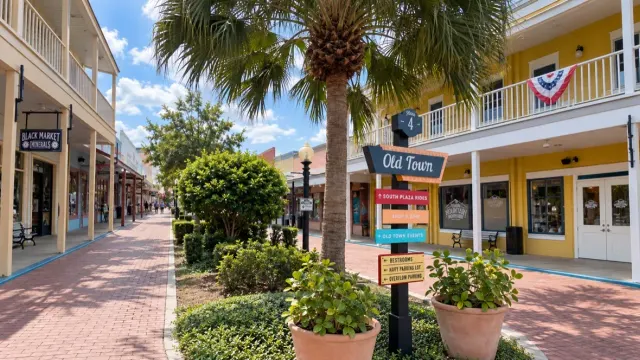
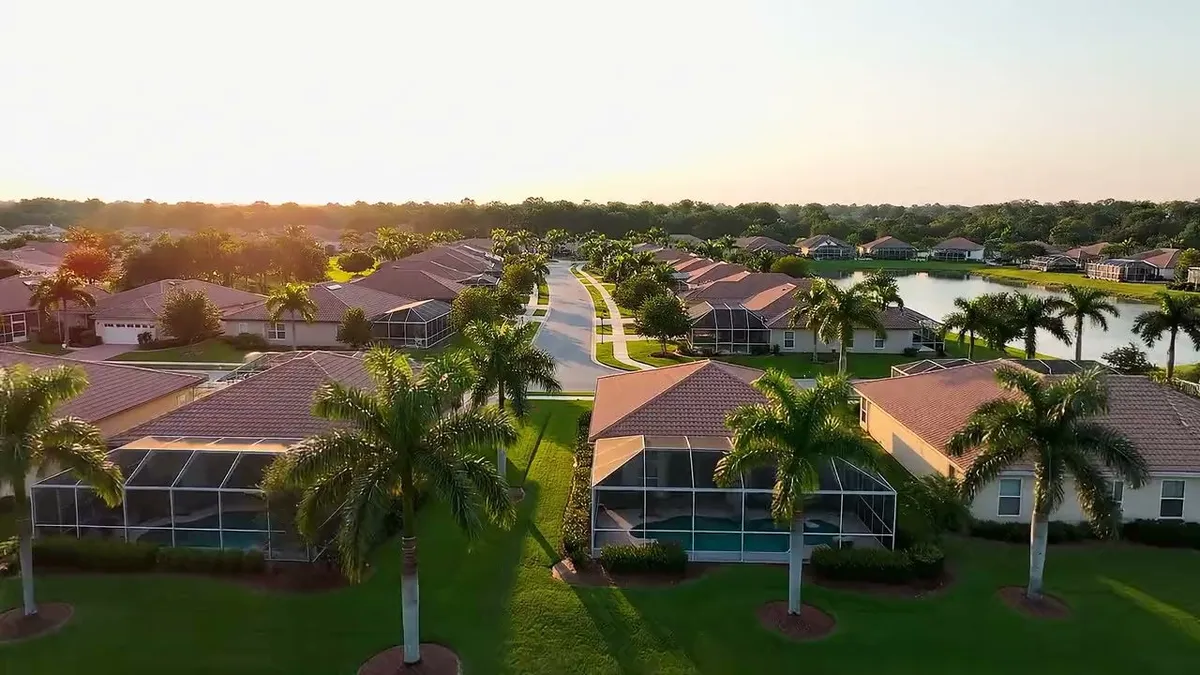
CDD fees come up in almost every search for a newer home between Davenport and Kissimmee, and they are easy to miss in a listing. Buyers ask us what the fee is, who sets it and how to find it for one address. These are the answers, with the districts' own figures.
Key takeaways
- A community development district is a small local government that builds and looks after a community's roads, ponds, landscaping and amenities.
- CDD fees are a flat line on the county tax bill, on top of property tax. The homestead exemption does not reduce them.
- The amount depends on the district and the lot. Examples below run from $342.96 to $4,629.72 a year.
- Most districts charge two parts: operations, which is set every year, and bond debt, which ends when the bonds are paid.
- HOA dues are a separate charge, paid to the association and not on the tax bill.
What a CDD is
What is a community development district?
Florida law defines it as "a local unit of special-purpose government" created under Chapter 190 of the Florida Statutes and limited to the functions that chapter allows. In practice a district borrows to build a community's roads, drainage, utilities and amenities, then charges the owners inside it to repay the bonds and keep things running.
Who runs it?
A board of supervisors. The board adopts a budget each year and sets the assessment in public meetings. Each district posts its budgets, meeting dates and assessment schedules on its own website, which is where the figures below come from.
Is a CDD the same as an HOA?
No. A CDD is a unit of government, and its charge is collected with property tax. A homeowners association is a private corporation that enforces the community's covenants and bills its own dues. Many homes here have both. At ChampionsGate, the Retreat's association says an owner there belongs to the Retreat association, the master association and the Oasis club, as well as sitting in a district.
Which communities here have one?
Three districts cover ChampionsGate. Near Davenport, Polk County's records list Solterra Resort, Astonia and Sandmine Road (Windsor Island Resort) in the county area. Inside the City of Davenport they list North Powerline Road (Bella Vita), Highland Meadows, Holly Hill Road East, Forest Lake, East 547 (Geneva Landings), Davenport Road South (Orchid Grove) and Hartford Terrace. Our ChampionsGate guide and Davenport guide go through them.
What CDD fees cost
How much are CDD fees?
It depends on the district and the size of the lot. Two examples from adopted schedules:
- Stoneybrook South at ChampionsGate set its operations assessment for fiscal 2027 at $342.96 for a condominium, $445.84 for a townhome and $548.72 to $1,097.44 for a single-family lot, by width.
- Solterra Resort set its combined assessment for fiscal year 2025-2026 at $3,618.80 to $4,629.72 per home.
The two are not like for like. The Stoneybrook South figure is operations only, and Solterra's includes bond debt.
What are the two parts of the fee?
Operations and maintenance pays for the year's upkeep, and the board resets it with each budget. Debt service repays the bonds that built the community. At Stoneybrook South the debt part depends on the tract's bond series: $771 or $989 a year for a condominium, $702 or $1,094 for a townhome, and $1,095 to $1,719 for a single-family lot. A 50-foot lot there pays about $1,781 to $2,092 a year in all.
Do CDD fees ever go away?
The debt part ends when that bond series is paid off. The operations part does not, because the ponds, roads and landscaping still need looking after. Ask the district's manager which bond series a lot is in and when it matures.
Does the homestead exemption reduce them?
No. The exemption lowers the value that millage is charged on. A CDD assessment is a flat amount per home, so it is the same whether the home is homesteaded or not. Our post on Florida property taxes covers what the exemption does change.
Can I deduct CDD fees on my taxes?
It depends on what each part of the charge pays for. The IRS covers assessments for local benefits in Publication 530, Tax Information for Homeowners. Take the district's assessment schedule to a tax professional and ask how it applies to your bill.
Checking a home before you buy
Where do CDD fees show up?
On the county tax bill, as a non-ad valorem assessment below the millage lines. The county Property Appraiser's record for the parcel lists each one. In Polk County that is polkflpa.gov. A listing may mention the district, but the tax record is where the amount is.
Will my lender count them?
Lenders look at the full monthly cost of a home, and the tax bill is part of it. The Consumer Financial Protection Bureau's Loan Estimate explainer shows the line where a lender puts estimated taxes, insurance and assessments. Give your lender the address early so the estimate uses the real bill. You can also add the fee to the tax line in our mortgage calculator.
Does a seller have to tell me about the district?
For a first sale, yes. Florida law requires a contract for the initial sale of a home in a district to carry a disclosure in bold type just above the buyer's signature. It says the district may levy taxes and assessments on the property, and that these are in addition to county and other local taxes. On a resale, check the tax record yourself.
What should I ask for before making an offer?
- The parcel's tax bill, with every non-ad valorem line.
- The district's current assessment schedule and adopted budget.
- The bond series for the lot and the year it is paid off.
- The association's dues and documents, which are separate.
- For a home you plan to rent, any amenity or resort fee the district charges renters.
If a home you like is in a district, contact the office with the address. We will pull the tax record and the district's schedule, and you can see the full yearly cost before you decide. You can also search homes for sale and ask us about any of them.